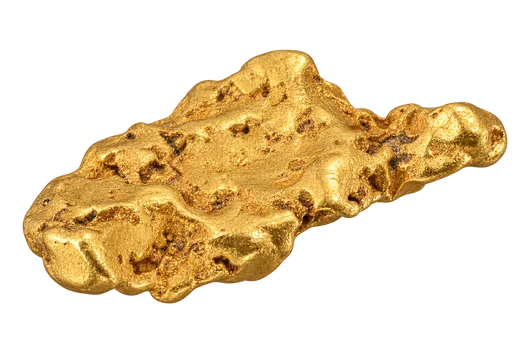
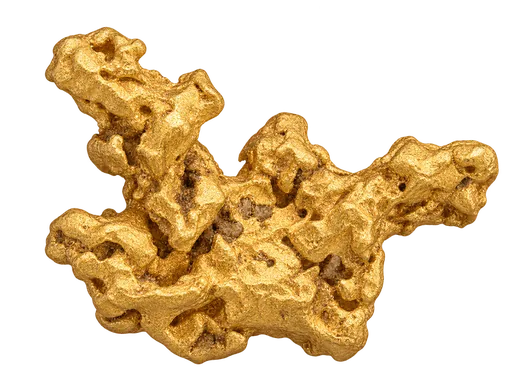
An assay is a laboratory measurement of metal in a submitted sample. For gold exploration, the result is commonly reported as grams of gold per metric tonne of rock, written g/t Au. “Au” is the chemical symbol for gold. A result of 1 g/t means the tested material contains one gram of gold per tonne on average. It does not mean a tonne of that rock has already been mined, processed or sold. The lab measures the sample it receives; the field team must make sure that sample represents the interval or location claimed in the release.

Gold can be invisible to the eye, present in tiny grains, or concentrated in a few coarse pieces. Two samples that look alike can assay differently. A bright yellow fleck in core can be interesting, but appearance alone is not a grade. A reliable number depends on collection, lab preparation, the analytical method and quality checks. Each step leaves a record that helps the company, a qualified person and readers decide how much confidence to place in the result.
From a labelled bag to a prepared sample
The field team assigns a unique identifier to each piece of core, channel or rock sample. The bag is sealed and sent with a submission list. The lab checks the shipment, dries the material where required, crushes it and takes a portion for finer grinding. It then takes a smaller analytical portion from the prepared material. Those steps turn a large, uneven rock sample into a smaller portion the instrument or fire-assay procedure can measure. If gold is very unevenly distributed, representativeness at each split becomes particularly important.
The original rock may weigh kilograms, while the analytical portion is far smaller. A laboratory follows a stated preparation procedure to reduce bias, but no method can make a hand-picked field sample representative of an entire hill. The field sampling chapter covers that first choice. The assay chapter begins after the sample is defined. A useful release names the lab, its preparation and analytical methods, and whether the lab is independent of the company.
Fire assay and reported units
Fire assay is a long-used and common way to measure gold. The prepared portion is fused under controlled conditions, and the gold is separated and measured using a stated finish. Laboratories offer different finishes and detection ranges. A very high result may require an over-limit test with a method suited to that concentration. A report should not leave readers guessing whether a value is an initial screen, a final over-limit result or an average of repeat tests.
Assay units can change with the sample type. Drill core and rock are often reported in g/t; soil may appear in parts per billion, abbreviated ppb. One gram per tonne equals one part per million by mass, so a 1 g/t result is 1,000 ppb. That conversion does not make a soil sample comparable to a drill interval. The materials, collection methods and questions are different. Before ranking numbers, check the unit beside each one and the reason the sample was collected.
Standards, blanks and duplicates
Companies insert control samples into the batches sent to a lab. A certified reference material or standard has an expected gold value and helps check accuracy. A blank is expected to contain very little gold and can reveal contamination during preparation or handling. A duplicate tests how repeatable a result is when similar material is sampled or prepared again. These are often grouped under quality assurance and quality control, or QA/QC. Their presence is not a guarantee that every result is perfect; the company must review what they show.
If a standard is far from its expected value or a blank contains unexpected gold, the affected batch may need investigation or repeat work. Duplicates can vary because of natural unevenness, especially with coarse gold. The source of a duplicate matters: a second split at the lab tests a different part of the process from a second piece of core taken in the field. A concise release may summarize the checks; a technical report should provide more detail on acceptance limits, failures and corrective steps.
Coarse and visible gold
Gold grains may be sparse but large enough that one small portion contains a grain while another portion does not. This is often called a nugget effect. A geologist may request a larger-sample method, metallic-screen procedure or repeated assays when suitable for the material. Such methods are not magic corrections to a weak sampling plan; they are ways to measure a difficult sample more fairly. The release should identify which results used a different method and why.
Visible gold in core is a field observation. It can prompt special handling and rapid interest, but the surrounding core may be lower grade, and a photograph gives no reliable estimate of average gold. Check the interval selected for assay, the method used and the nearby holes. A small rich grain does not by itself establish a broad zone. Conversely, a sample with no visible gold can still carry a meaningful assay because most gold grains are too small to see.
Recovering confidence in an unusual result
Suppose a company reports one exceptionally high value among many ordinary samples. The first questions are whether the sample was correctly identified, whether the lab repeated an over-limit test and whether control samples passed. Next comes geology: is the value in a vein or alteration zone that can be mapped and found in neighbouring holes? A repeat assay can confirm gold in that original sample, but only more sampling can show whether the zone continues through the rock. Analytical confidence and geological continuity are separate matters.
The inverse also matters. A low assay from a target that looked promising can mean the rocks carry little gold at that location, that the hole missed the structure or that a different part of the system should be tested. The geological log and sample intervals help distinguish these possibilities. Readers should resist treating the lab result as either a full success or full failure without the map and the team’s stated hypothesis.
What a release should show
Look for the lab name, analytical method, sample interval and units. Check whether high values were re-assayed, whether coarse-gold methods were used, and how the company describes standards, blanks and duplicates. For drilling, find the complete table with the start and end depth of each reported interval. Assays are measurements from samples; the reading results chapter shows how those numbers become length-weighted intervals and how to compare nearby holes.
The U.S. Geological Survey publishes fire-assay method information, and the Geological Survey of Canada and provincial surveys provide background on exploration samples. The exact procedure in a release belongs to the named laboratory and project. If a result is central to a company’s claim, read the original release and technical report rather than relying on a short headline. A trustworthy number has a traceable sample, a suitable method and checks that were actually reviewed.